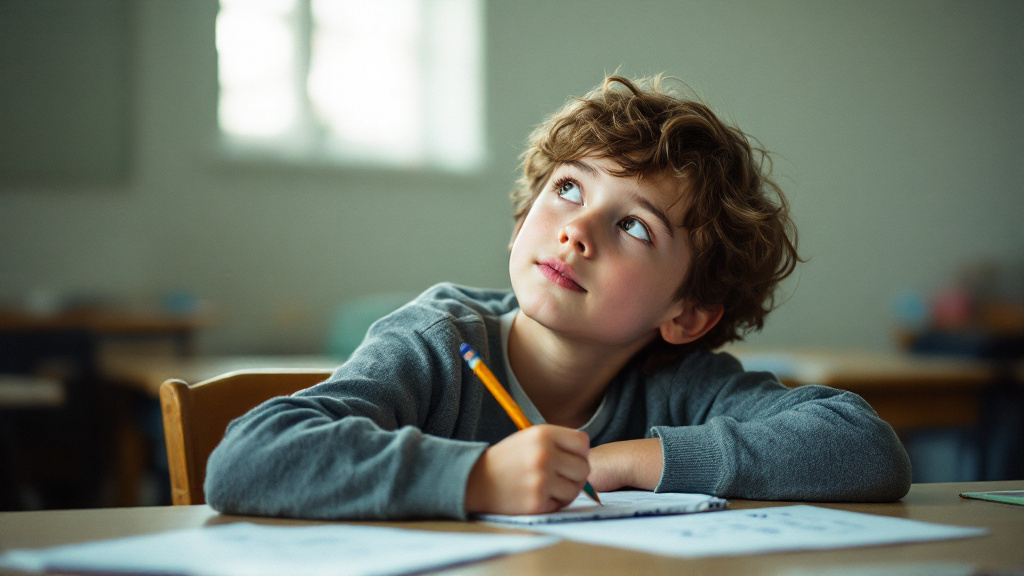
Kinesthetic learners absorb information through movement, touch, and hands-on experience rather than reading or listening alone. Traditional geography instruction relies heavily on maps, textbooks, and passive observation, leaving these active learners disengaged. Geography lessons for kinesthetic learners require physical activity, tactile exploration, and movement-based tasks that transform abstract concepts like continents, climates, and borders into experiences they can feel and do.
What Makes Kinesthetic Learning Effective for Geography
Kinesthetic learners retain up to 75% more information when they engage their bodies in the learning process compared to passive study methods. For geography, this means stepping away from flat maps and toward activities that involve movement, building, tracing, and spatial reasoning with real objects.
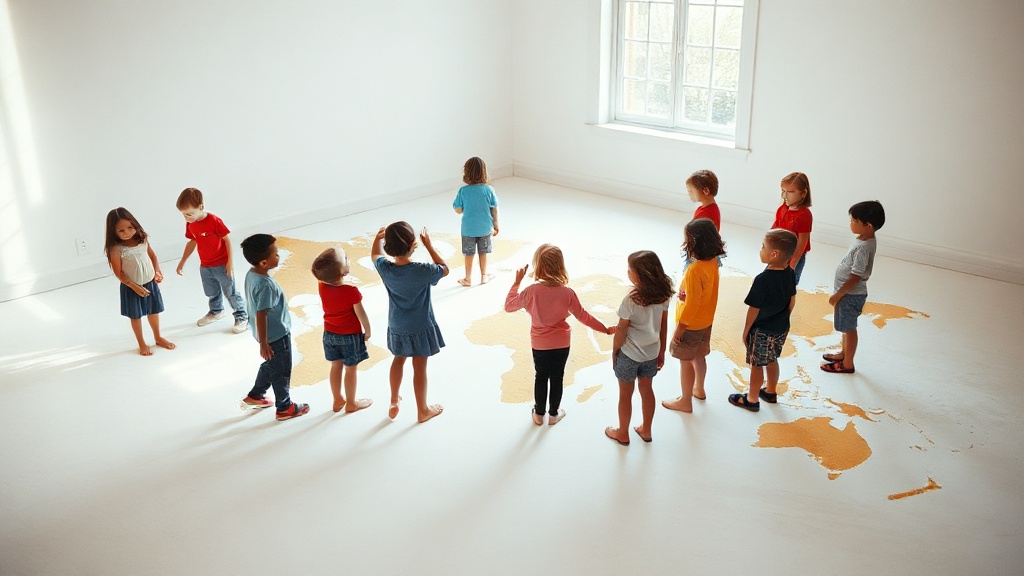
Geography is inherently spatial and visual, making it ideal for kinesthetic approaches. When children physically walk the outline of a continent, construct a mountain range from clay, or role-play as explorers navigating obstacles, they build mental maps tied to muscle memory and sensation. These embodied experiences create stronger neural pathways than passive reading.
Movement-Based Geography Activities
Physical movement anchors geographic knowledge in children's bodies. Here are practical activities:
- Human Map Creation: Use a large floor space to have children stand and arrange themselves as countries or continents, learning borders and relative positions through spatial awareness.
- Obstacle Course Exploration: Set up stations representing different climates or terrain types; children navigate deserts (sand), mountains (cushions stacked high), forests (cones to weave through), and oceans (tape lines to jump across).
- Direction and Compass Games: Practice north, south, east, and west with movement commands: "Walk north for five steps, then turn east and hop three times."
- Journey Mapping: Have children walk a path while you narrate crossing a landscape; they experience the physical effort of climbing hills or trudging through muddy terrain.
- Latitude and Longitude Dance: Assign grid coordinates, and children move to intersections on a large floor grid, understanding how maps use grids to locate places.
These activities work best when paired with short illustrated lessons that explain the concept, followed by timed quizzes that reinforce learning through active recall.
Hands-On Crafts and Building Tasks
Tactile creation deepens geographic understanding. Kinesthetic learners benefit from:
- Terrain Modeling: Use playdough, sand, or clay to sculpt mountains, valleys, and river systems. Children feel the slope of a hillside and understand erosion through texture.
- Map-Making with Materials: Instead of drawing, provide collage materials, natural objects, and textured fabrics to represent biomes, water, and landforms.
- 3D Landform Construction: Build model volcanoes, canyons, or fjords using craft materials, helping children grasp how geographic features form.
- Flag and Border Crafts: Create flags from fabric scraps and design borders using rope or tape on the floor, making political geography tangible.
- Weather Simulation Experiments: Spin a water globe to understand ocean currents, freeze water to grasp ice caps, or create a miniature tornado in a bottle.
These projects naturally lead to custom topics that adults can create around a child's interests, turning a geography lesson into a week-long hands-on project.
Interactive Quizzes That Reinforce Movement Learning
After physical exploration, kinesthetic learners need quizzes that ask them to recall and apply what their bodies learned. Effective quiz questions include:
- "Which continent is south of North America?" (children visualize their human map or obstacle course layout).
- "If you were walking north and turned east, which direction would you be facing?" (recalls the movement game).
- "What happens to terrain as you climb a mountain?" (references tactile modeling or obstacle course experience).
Quizzes work best when they follow an illustrated lesson and use optional timers that don't create pressure, allowing kinesthetic learners to think through the spatial information they internalized through movement rather than rushing to guess.
Geography Topics Well-Suited to Kinesthetic Methods
Certain geography areas naturally fit kinesthetic instruction:
- Continents and Countries: Movement-based position learning, border tracing, and human map creation.
- Landforms and Terrain: Clay modeling, obstacle courses simulating different landscapes, and texture exploration.
- Climate Zones: Weather simulation, seasonal movement activities, and tactile representations of biomes.
- Rivers and Water Systems: Water play, flow experiments, and tracing water routes with body and finger movement.
- Map Skills: Compass directions, grid coordinates, and orientation games.
Specialized topics like Australia's geography, diverse continents, or local landmarks can all be taught using kinesthetic methods that make abstract knowledge concrete and memorable.
Combining Kinesthetic Learning With Visual and Written Input
Kinesthetic learners aren't exclusively movement-focused; they learn best when physical activity is combined with visual supports and clear explanations. The most effective lessons for kinesthetic learners follow a three-part structure:
- Visual Introduction: An illustrated lesson showing the geography concept, landmark, or process.
- Kinesthetic Exploration: A hands-on activity, movement task, or craft that embodies the concept.
- Knowledge Check: A quiz that asks children to recall and apply what they learned through both the visual lesson and physical experience.
This structure ensures that kinesthetic learners receive the visual and auditory input they also need, while prioritizing the movement and tactile engagement that makes geography stick.
Creating a Kinesthetic Geography Environment
The learning space matters. Kinesthetic geographers thrive in environments where:
- There is open floor space for movement activities.
- Materials for building and crafting are easily accessible.
- Adults are willing to step outside traditional classroom setups.
- Progress is tracked so children see how their hands-on learning translates to improved quiz performance and deeper understanding.
When kinesthetic learners see their movement-based learning reflected in completed quizzes and saved progress records, they gain confidence that their preferred learning style is valid and effective.
Frequently Asked Questions
What if my child is a mixed learner, not purely kinesthetic?
Most children blend learning styles. Kinesthetic geography activities benefit all learners when combined with visual lessons and written quizzes. Even visual learners often retain spatial information better through movement, and reading-focused learners still benefit from tactile exploration before diving into text.
How much space do kinesthetic geography activities need?
Activities range from desk-based (clay modeling, map crafts) to full-room (human maps, obstacle courses). Start small with tactile crafts and gradually introduce larger movement activities as space and comfort allow. Even a corner of a classroom or living room can accommodate kinesthetic learning.
Can kinesthetic methods work for young learners (5-7 years old)?
Yes, absolutely. Young kinesthetic learners often rely almost exclusively on movement and touch. Simple obstacle courses, human maps with basic continent shapes, and sand or playdough modeling are ideal for ages 5-7. Tailor activities to attention span and fine motor skills.
How do I assess learning if my child is learning through movement?
Quizzes paired with kinesthetic activities provide clear evidence of understanding. When a child who built a volcano correctly answers "What forms when pressure builds under Earth's crust?" the kinesthetic experience translates directly to knowledge. Tracking progress over time shows whether hands-on methods improve retention.
Are kinesthetic geography lessons just for children who struggle with sitting still?
No. Kinesthetic learning isn't a behaviour management tool; it's a valid learning modality that works for many children, including gifted and advanced learners who become bored with passive geography instruction. Movement-based learning engages the brain differently and deepens understanding across ability levels.
How can I combine kinesthetic geography with a structured curriculum?
Start with built-in geography topics like continents, countries, or Australia, then add kinesthetic activities before or alongside the illustrated lesson. Use the lesson-quiz structure as your framework, and nest hands-on projects within it. This keeps kinesthetic learning aligned with curriculum goals while honouring how your child's brain works best.
Conclusion
Geography doesn't have to be confined to maps and textbooks. Kinesthetic learners thrive when geography lessons involve movement, building, and spatial exploration. By combining illustrated lessons, hands-on activities, and knowledge-checking quizzes, adults can create geography instruction that feels like play while building deep, lasting understanding of the world's places, features, and systems. The result is children who don't just know where places are; they understand geography in their bones.
Written by The PebbleYard team
We build the app and use it on our own kids.
Build your first topic tonight
Seven days free, no card.